Rainbow Chard, Purple Basil & Other Gorgeous Edibles for a Beautiful Edible Garden
Rainbow chard, purple basil, and other gorgeous edibles prove that productive gardens can be stunning too. Discover the most colourful, ornamental food plants and how to combine them for a beautiful edible garden that looks as good as it tastes.
INDOOR VEGETABLE GARDENING
If you’ve ever wished your vegetable garden looked a little more like a design feature and a little less like a patch of practical plants, this is the post for you. Colorful edibles can turn a regular garden bed or container into something that feels almost ornamental.
Rainbow chard and purple basil are two of the easiest ways to add visual drama without giving up flavor. They’re productive, useful, and honestly just fun to grow.
Why Colorful Edibles Work
Colorful edibles do more than make a garden look pretty. They help you mix beauty and function in the same space, which is especially useful if you’re gardening in a small yard, balcony, or patio.
They also make edible gardens feel intentional. Instead of hiding vegetables away, you can put them front and center and let the colors do some of the work for you.
Visual interest
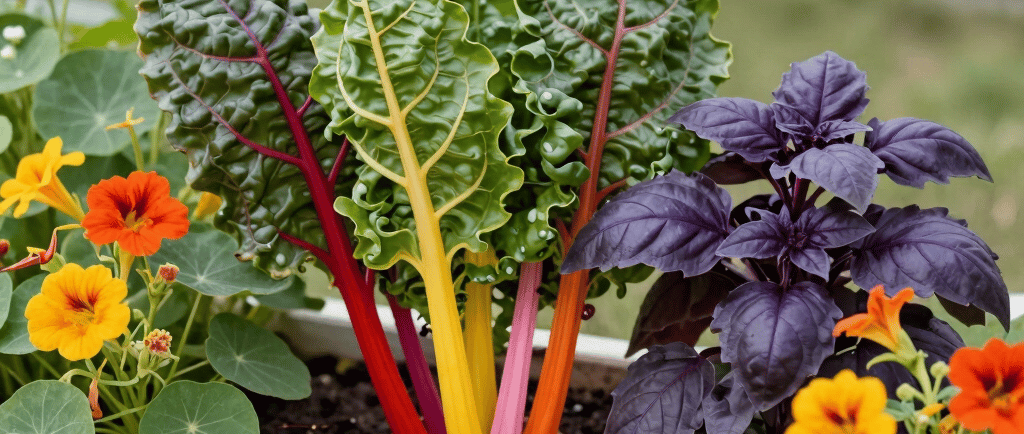
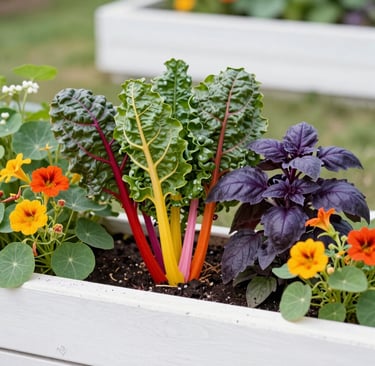
Rainbow chard brings bright stems in red, yellow, orange, pink, and white. Purple basil adds deep contrast with rich plum-toned leaves that stand out against green foliage.
Practical harvests
These plants are not just decorative. Rainbow chard gives you a steady cut-and-come-again leafy green, and purple basil can be used in pesto, salads, sauces, and garnish.
Easy mixing
Colorful edibles fit nicely into containers, raised beds, and border plantings. You can pair them with herbs, flowers, and leafy greens to create a garden that feels layered and balanced.
Rainbow Chard Basics
Rainbow chard is one of the easiest showpieces for an edible garden. The leaves are broad and glossy, and the stems come in bright, candy-colored shades that really pop in the sun.
It grows well in cool to mild weather and can keep producing if you harvest it properly. Pick the outer leaves first and let the center keep growing.
Best growing conditions
Full sun to partial shade.
Rich, well-drained soil.
Regular watering, especially in warm weather.
Good companion plants
Purple basil.
Lettuce.
Nasturtiums.
Calendula.
Parsley.
How to use it
Sauté the leaves like spinach.
Chop the stems into stir-fries.
Add young leaves to salads.
Roast or steam the stems for a simple side dish.
Purple Basil Basics
Purple basil gives you that deep, moody color that makes a garden look instantly more curated. It has the familiar basil fragrance and flavor, but the foliage adds a whole new layer of interest.
It does best in warm weather and full sun, with fertile soil that drains well. Pinching the tips regularly helps it stay bushy instead of tall and scraggly.
Best growing conditions
Full sun.
Warm temperatures.
Even moisture.
Regular harvesting.
Good companion plants
Rainbow chard.
Green basil.
Tomatoes.
Marigolds.
Ornamental peppers.
How to use it
Make purple pesto.
Slice into salads.
Use as garnish on pasta or soups.
Infuse in vinegar or oil.
Other Gorgeous Edibles
If you want an edible garden that really feels special, mix in a few more colorful crops. The trick is to choose plants that have strong leaf color, edible flowers, or interesting stems.
Red Russian kale
Red Russian kale has softer, more decorative leaves with purplish veins and a graceful shape. It works well in cool weather and can make a garden bed look almost like an ornamental planting.
Scarlet runner beans
These are great if you want vertical interest. The red flowers are beautiful, the vines grow fast, and the beans give you a useful harvest later on.
Ornamental peppers
These little plants bring intense color in both foliage and fruit. They’re compact, bold, and perfect for containers or edging.
Nasturtiums
Nasturtiums are one of the best edible flowers to grow if you want color fast. The leaves, flowers, and seeds are edible, and the plants spill beautifully over the edge of pots.
Calendula
Calendula adds golden and orange color while also giving you edible petals. It works well in borders, mixed beds, and containers.
How to Design a Colorful Edible Garden
The best colorful edible gardens still feel organized. If every plant is shouting at once, the space gets messy fast.
Start with one or two main colors and repeat them throughout the bed or container. For example, pair rainbow chard with purple basil, then echo those colors with a few nasturtiums or violas.
Simple design tips
Repeat colors instead of using every color at once.
Mix heights so the garden feels layered.
Put the boldest plants where you’ll see them first.
Use containers or edging to keep the layout clean.
Container Ideas
Colorful edibles are fantastic in containers because you can control the look and move things around as needed. A deep pot with chard, basil, and nasturtiums can be both pretty and productive.
Try grouping plants by height:
Tall plant in the center or back.
Medium plant beside it.
Trailing or low plant at the edge.
That little structure makes even a tiny pot look planned instead of random.
Care and Harvest Tips
Colorful edibles still need the basics: good soil, consistent water, and regular harvests. If you let them get neglected, the colors can fade and the plants can get leggy.
Harvest chard leaves often to encourage new growth. Pinch basil before it flowers if you want lots of leaves. And keep an eye on pests, because tender leafy crops can attract aphids and other little troublemakers.
Conclusion
Rainbow chard, purple basil, and other gorgeous edibles prove that a productive garden can also be beautiful. You do not have to choose between style and harvest when you design with color in mind.
Start small with one container or one bed, then build from there. Mix in a few edible flowers, repeat your colors, and let the garden feel useful and pretty at the same time.