
The Ultimate Apartment Plant Care Cheat Sheet: What to Do Every Week, Month & Season
The only apartment plant care cheat sheet you'll ever need. Discover exactly what to do every week, every month, and every season to keep your houseplants alive and thriving all year long.
INDOOR PLANT CARE & WELLNESS
Introduction
Studies show that over 75% of houseplants die within their first year of being brought home — and the number one reason isn't neglect, bad light, or wrong soil. It's inconsistency. People care for their plants in bursts — intensely for a week, then not at all for three — and that unpredictable cycle of too much and too little is what kills more plants than any single mistake ever could.
I learned this the hard way. For the first two years of my plant parent journey I had exactly zero routine. I watered when I remembered, fertilised approximately never, repotted when things looked desperate, and then wondered why half my collection was slowly declining despite my best intentions. The plants I kept alive were surviving me more than they were thriving because of me. Not exactly the plant parent identity I was going for.
The thing that changed everything wasn't buying better plants or finding a magic soil mix or discovering some secret technique. It was building a simple, repeatable care routine — a cheat sheet, basically, of exactly what to do and when to do it. Weekly tasks that take ten minutes. Monthly tasks that take twenty. Seasonal tasks that take an hour or two a couple of times a year. That's genuinely all it takes to go from plants that are just surviving to plants that are visibly, obviously thriving.
That cheat sheet is what this guide is. Not vague advice about "checking moisture levels" — actual, specific, actionable tasks with timing built in. By the end of this you'll have a complete plant care system you can start using this week. Let's get into it. 🌿
Why Most Apartment Plant Parents Need a Care Schedule (And Don't Have One)
Here's a thing I've noticed talking to other plant people over the years — almost everyone has a vague sense of what their plants need, and almost no one has a system for actually delivering it consistently. We know we're supposed to water when the soil is dry. We know fertilising is important. We know repotting needs to happen at some point. But knowing and doing are two completely different things, and without a routine, the doing tends to happen in reactive bursts rather than proactive rhythms.
The gap between plant love and plant knowledge is real, but it's not actually the main problem. The main problem is the gap between plant knowledge and plant habit. I know plenty of people who've read extensively about plant care — who understand the science of root rot, who know exactly what bright indirect light means, who can name the symptoms of every common deficiency — whose plants still struggle because they don't have a consistent practice. Knowledge without habit is just trivia.
The "water when dry" advice that's on the care tag of practically every houseplant sold is technically correct and practically useless for most people. It doesn't tell you how often to check. It doesn't account for seasonal variation. It doesn't give you a moment in your week where plant checking is the thing you do. Without that specific moment — a time, a day, a trigger — checking the soil becomes one of those things you mean to do and then don't. The plant dries out. Or you panic-water. And the cycle continues.
What a care schedule does — and why it works when vague advice doesn't — is convert good intentions into specific actions with specific timing. Instead of "I should probably check my plants soon," it becomes "Sunday morning is plant morning, and here are the five things I do every Sunday morning." That specificity is everything. It removes the decision-making from the equation. You don't have to think about whether you should check your plants — you just do the thing that Sunday morning means you do.
The results of building this routine were honestly surprising to me when I first did it. Not because the tasks themselves were revolutionary — they weren't. But because consistency compounded. Plants that got checked regularly got problems caught early. Pests were spotted when they were one or two insects rather than a full infestation. Root-bound plants got repotted before they started seriously declining. Watering happened based on actual soil moisture rather than guilt or anxiety. Within two months of building a consistent routine, my collection went from struggling to visibly thriving — and I was spending less time on my plants overall, not more.
Your Weekly Apartment Plant Care Checklist
Weekly plant care is the foundation of everything else, and the good news is it takes about ten minutes once you've got the hang of it. I do mine on Sunday mornings before I do anything else — coffee in hand, no rush, just a quiet walk around my plants. It's become one of my favourite parts of the week, honestly. Here's exactly what I do.
The finger test on every container. This is the non-negotiable starting point of every weekly check. Stick your finger one to two inches into the soil of every container. Moist? Leave it. Dry? Water thoroughly — all the way through until it drains from the bottom. This takes about thirty seconds per plant and gives you actual information rather than guesswork. I was amazed when I started doing this consistently how different the moisture levels were across my collection at any given time. Some plants needed water every week like clockwork. Others — the snake plants, the ZZ plants — went two or three weeks easily. The finger test makes that variation visible instead of invisible.
Checking for pests on leaf undersides. This one feels tedious until the first time it saves a plant. Spider mites, mealybugs, and aphids all prefer the sheltered underside of leaves to the top surface — which means a plant can have a significant pest problem that's completely invisible from above. I lift or gently tilt leaves and have a quick look at the undersides on every plant, every week. The whole check takes maybe two minutes across a collection of twenty plants. Early-stage pest problems — a few aphids, the first signs of spider mite webbing — are easy to deal with. Late-stage infestations are not. Catching things early is worth every second.
Removing dead or yellowing leaves. Any leaf that's yellow, brown, or dead comes off during the weekly check. This isn't just aesthetic — dead and dying leaves can harbour fungal spores and pests. Clean plants stay healthier. I keep a small pair of clean scissors in my plant corner specifically for this — clean cuts rather than tearing, which leaves less tissue damage and a cleaner wound for the plant. Takes about a minute total.
Rotating plants a quarter turn. This one sounds minor but makes a real visible difference over time. Plants grow toward light, and without rotation they develop a noticeable lean and uneven growth — one side lush, the other sparse. A quarter turn every week keeps growth even and the plant looking symmetrical and full. Takes literally ten seconds per plant.
Wiping dusty leaves. Once a month is fine for thorough leaf cleaning, but a quick check for dust during the weekly round takes almost no time. Heavily dusty leaves can't photosynthesise as efficiently — the layer of dust blocks light absorption. For large-leafed plants like monstera and rubber plants, a damp cloth on each leaf once a month makes a visible difference to how vibrant the leaves look. During the weekly check I just note which ones are getting dusty and flag them for the monthly clean.
Your Monthly Apartment Plant Care Checklist
Monthly plant care goes a little deeper than weekly maintenance — these are the tasks that keep your plants healthy over the medium term rather than just keeping them alive week to week. I block out about twenty minutes at the start of each month and work through the collection systematically.
Fertilising during the growing season. This is the monthly task most plant parents either forget entirely or are inconsistent about, and it shows in the difference between plants that just survive and plants that genuinely thrive. During the growing season — roughly March through September in most temperate climates — actively growing houseplants benefit significantly from regular feeding. I use a balanced liquid fertiliser diluted to half the recommended strength and apply it once a month to everything that's actively growing. The half-strength rule matters — over-fertilising is a real problem that causes salt buildup in soil and root damage. Less is more. In winter I skip fertilising entirely — more on that in the seasonal sections.
Checking for root-bound signs. Once a month I check whether any plants are showing signs of being root-bound — roots visibly emerging from drainage holes, soil that seems to have disappeared into the root mass, the plant drying out within a day or two of thorough watering, or noticeably stunted new growth despite adequate light and water. Root-bound plants need repotting, but not necessarily immediately — knowing a plant is getting root-bound means I can plan for it and repot at the right time rather than in an emergency.
Deep cleaning pots and saucers. Saucers that collect drainage water can develop algae, mineral buildup, and sometimes fungal growth if left unchecked. Monthly I empty and wipe down every saucer. For pots that have significant mineral deposits on the outside — that white crusty buildup, especially on terracotta — a scrub with a diluted white vinegar solution cuts through it easily. This isn't just aesthetic — mineral buildup on the inside of pots can affect soil chemistry over time.
Assessing light placement as seasons shift. The angle and intensity of natural light changes throughout the year, and monthly is a good cadence to reassess whether your plants are still in the right spots. A position that was perfect bright indirect light in March might be direct scorching sun by June as the sun's angle shifts. Conversely, a spot that had reasonable light in summer might become too dark by November. Monthly reassessment catches these shifts before they cause damage.
Checking soil quality and top dressing. Over time, potting soil loses structure — it compacts, the organic matter breaks down, and drainage worsens. Monthly I check whether the soil in any containers is looking particularly compacted or pulling away from the pot edges. When it is, a top dressing — removing the top inch or two of old soil and replacing it with fresh potting mix and a small amount of worm castings — refreshes the nutrient content and improves drainage without the full disruption of repotting.
Your Seasonal Plant Care Guide — Spring
Spring is the most energetic season in the plant care calendar and honestly my favourite. Everything starts waking up — you see new growth appearing on plants that have been dormant-ish all winter, the light coming through the windows shifts and strengthens, and the whole collection seems to exhale and stretch. This is the season for action, and getting spring right sets up the whole rest of the year.
Repotting root-bound plants. Spring is the best time to repot — plants are waking up and entering their active growing season, which means they recover from the stress of repotting quickly and immediately benefit from the fresh soil and extra root space. I go through my whole collection in early spring and check every plant for root-bound signs. Anything that qualifies gets repotted up one pot size — just one, never more — using fresh, high-quality potting mix. It's one of those tasks that feels like a lot of work in the moment and then you see the results six weeks later and it was absolutely worth it.
Starting seeds indoors. If you're growing any edibles — herbs, tomatoes, peppers, lettuce — spring is when the indoor seed starting begins. Most edible seeds need a six to eight week head start indoors before they're ready to move to an outdoor balcony or patio space after the last frost. I use simple seed starting trays on a south-facing windowsill with a cheap grow light above, and the results are consistently impressive. Starting from seed is so much cheaper than buying seedlings — and genuinely satisfying in a way that buying an established plant just isn't.
Resuming fertiliser after the winter break. I stop fertilising entirely from October through February — plants aren't actively growing and don't need or use the nutrients, and over-fertilising dormant plants causes more harm than good. Come March, when I start seeing new growth appearing on my plants, that's my signal to resume the monthly fertilising routine. The first feed of spring feels weirdly exciting after months of doing nothing on that front.
Moving plants closer to windows as light improves. Winter light is weak and often insufficient even for low-light plants. As spring progresses and light strengthens, plants that survived on a windowsill through winter can often be moved slightly back, and plants that were too far from the window can be moved closer to take advantage of the improving conditions. I reassess every plant's position in early spring and adjust based on how they've been performing through winter.
Introducing new plants to the collection. Spring is the best time to add new plants — garden centres have their best selection, plants are entering their active growing season so they establish faster in new environments, and you have the whole growing season ahead to get them settled. I limit myself to two or three new plants per spring to avoid overwhelming myself — and my space.
Your Seasonal Plant Care Guide — Summer
Summer is peak growing season and peak demand season simultaneously — your plants are doing the most, which means they need the most from you. It's the season I enjoy most from a watching-things-grow perspective and find most demanding from a care perspective. Here's what the summer care routine looks like.
Managing heat and direct sun. This one catches people off guard every year and I'm not exempt from this — I've scorched leaves on more than a few plants by not accounting for how dramatically the sun's angle and intensity changes between spring and midsummer. A south or west-facing window that was perfect in April can become a leaf-scorching situation by July. In midsummer I move sun-sensitive plants — calatheas, ferns, peace lilies — back from windows or use a sheer curtain to diffuse the most intense afternoon light. Sunburned leaves don't recover — the damaged tissue is gone permanently — so prevention is the only strategy.
Increasing watering frequency. Container plants in summer — especially outdoor ones in full sun — can dry out within 24 hours in hot weather. This is the season where the weekly watering check often isn't enough, and daily checks become the standard for outdoor containers and sun-exposed indoor ones. I check my balcony containers every morning in summer without exception. The consequences of missing a day in a heat wave can be significant — wilting stresses plants, and repeated wilting stress reduces fruiting on tomatoes and peppers and makes all plants more susceptible to pests and disease.
Watching for pests in warm conditions. Spider mites in particular love hot, dry conditions — summer is their season, and a plant that was pest-free all spring can develop a mite problem quickly during a heat wave. I increase my pest vigilance in summer — checking undersides of leaves twice a week rather than once — and at the first sign of any issue I treat immediately with neem oil spray or insecticidal soap. Hot dry air also encourages mite populations to explode faster than in cooler, more humid conditions, so catching things at the very first sign is critical.
Fertilising actively growing plants. Summer is peak fertilising season — plants are at maximum metabolic activity and can use the nutrients effectively. I stick to half-strength balanced liquid fertiliser every two weeks for most plants, switching to a low-nitrogen high-potassium formula for tomatoes, peppers, and other fruiting plants once they start flowering — this encourages fruit development over leafy growth. The difference this switch makes to fruiting productivity is genuinely impressive.
Humidity management for tropical plants. Central air conditioning in summer creates very dry indoor air — similar to the heating problem in winter but in the other direction. Tropical plants like calatheas, ferns, bird of paradise, and peace lilies struggle with low humidity. I group my tropical plants together to create a shared humid microclimate and use a pebble tray with water under the pots of my most humidity-sensitive plants. Misting is a thing people debate endlessly — my experience is that it helps marginally but evaporates too quickly to make a sustained difference. Grouping and pebble trays work better.
Your Seasonal Plant Care Guide — Autumn
Autumn is the transition season — the moment everything starts to slow down, and your care routine needs to follow that slowdown rather than fight it. This is the season where I see the most plant care mistakes, because people keep doing their summer routine into autumn and end up overwatering dormant or semi-dormant plants into root rot. Slow down with your plants. They're telling you to.
Reducing watering as growth slows. As day length decreases and temperatures drop, even actively growing houseplants slow their metabolism significantly. Soil stays moist longer than it did in summer — sometimes dramatically longer. The finger test remains the guide, but what it tells you in autumn is "not yet" far more often than it did in summer. I typically drop my watering frequency by 30-50% in autumn compared to summer, but I follow the soil rather than a fixed reduction. The soil always tells the truth.
Stopping fertiliser. October is when I stop fertilising everything. By this point most plants have stopped their active growth push and are beginning the slide toward dormancy — they don't need nutrients, can't use them effectively, and over-fertilising in autumn causes salt buildup in soil and potentially root damage on plants that aren't actively absorbing. I put the fertiliser away in October and don't touch it again until I see consistent new growth in spring. Five months of fertiliser-free care feels strange at first if you're used to monthly feeding, but it's exactly what the plants need.
Bringing outdoor plants inside. Any plants that spent summer on the balcony — herbs, tender succulents, tropical plants that were enjoying the warm conditions — need to come inside before night temperatures drop below 50°F (10°C). I bring things in gradually when possible rather than all at once — it gives plants time to adjust to lower indoor light rather than going from full sun to indoor conditions overnight. The transition can cause some leaf drop as plants adjust — this is normal and temporary.
Preparing for lower light conditions. Autumn's declining light is one of the biggest stressors for indoor plants, and addressing it proactively beats scrambling in December when things are already struggling. I clean my windows in early autumn — dirty glass blocks a surprising amount of light — and reassess all plant positions to get everything as close to the best available light as possible. Any plant that struggled with light in previous winters gets a grow light placed above it before the worst of the light decline arrives.
Planting cool-season crops for balconies. While summer crops wind down, autumn is the second growing window for edibles that many gardeners miss. A fresh sowing of cut-and-come-again lettuce, spinach, arugula, and radishes in early autumn will produce reliably until the first frost and sometimes beyond in mild climates. After spending all summer watching tomatoes and peppers, getting a second round of leafy green harvests from the same balcony space feels like a bonus round.
Your Seasonal Plant Care Guide — Winter
Winter is the season most plant parents find hardest because it requires the counterintuitive practice of doing less — less watering, less feeding, less fussing — when the instinct during dark cold months is to compensate for the gloomy conditions by paying more attention to your plants. Fighting that instinct is genuinely difficult. But doing less in winter is almost always the right call.
Minimal watering for dormant plants. Most houseplants go semi-dormant in winter — they're not actively growing, their root systems are absorbing water far more slowly, and the soil stays moist for much longer between waterings. A snake plant that wanted water every ten days in summer might go four to six weeks between waterings in winter without any problem at all. The finger test remains your guide — I can't say this enough — but expect the answer to be "not yet" much more often than in the growing season. The biggest winter plant killer is well-meaning overwatering of plants that are trying to rest.
The no fertiliser rule. I said it in the autumn section and I'll say it again because it's important: no fertiliser from October through February. Fertilising dormant or semi-dormant plants pushes growth the plant isn't resourced to support, causes salt buildup in soil, and can damage roots. Put the fertiliser away. The plants will be fine. They will be better than fine, actually — a proper winter rest sets them up for a vigorous, healthy spring growing season.
Managing dry indoor air from heating. Central heating in winter creates very low indoor humidity — often dropping to 20-30% relative humidity, when most tropical plants prefer 40-60%. The symptoms are crispy leaf edges, brown leaf tips, and in severe cases leaf curl and drop. I address this with a combination of grouping tropical plants together, pebble trays under the most sensitive specimens, and moving my humidifier — which I was already running for my own comfort — near the plant corner. Moving plants away from heating vents and radiators matters too — the direct blast of warm dry air from a vent can damage nearby plants quickly.
Grow lights for low-light spaces. Winter light in a north or east-facing apartment can be genuinely insufficient for almost any plant. A simple full-spectrum LED grow light — a $20-40 LED bulb in a regular lamp, set on a timer for 12-14 hours a day — is the most cost-effective intervention for struggling winter plants. I set mine on a timer so it comes on automatically at 7am and off at 9pm. The difference in plant health and new growth rate between lit and unlit plants through winter is dramatic and completely worth the small investment and electricity cost.
Protecting plants from cold windows. Glass gets cold in winter — cold enough to damage tropical plant leaves that are pressing against it or sitting directly in the cold air zone near a single-pane window. I pull plants a few inches back from windows when temperatures drop significantly, and I check periodically whether any leaves are touching the glass. A leaf that's been touching cold glass overnight will often show damage the following morning — transparent or sunken patches that are effectively frost damage even in a heated apartment.
Plant-Specific Care Cheat Sheets
General schedules are the foundation, but individual plants have specific needs that deviate from the general routine. Here's a quick cheat sheet for the most common apartment houseplants — the ones I get asked about most often.
Pothos is forgiving almost to a fault, which is why it's such a great beginner plant. Water when the top two inches of soil are dry — roughly every 7-10 days in summer, every 14-21 days in winter. Fertilise monthly from March to September at half strength. Repot every 2-3 years or when roots emerge from drainage holes. Tolerates low light but grows fastest and most vibrantly in medium to bright indirect light. Prune trailing vines back when they get leggy — it encourages bushier new growth from the base. Propagates incredibly easily in water from any stem cutting with a node.
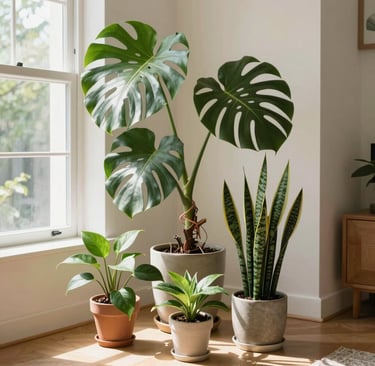
Snake plant is the most drought-tolerant common houseplant and the one most often killed by overwatering. Water only when the soil is completely dry — all the way through, not just the top layer — which in winter can mean once every 3-6 weeks. Fertilise 2-3 times through spring and summer, never in autumn or winter. Repot every 3-5 years — snake plants actively prefer being root-bound and perform better when slightly cramped. Thrives in low light though grows faster in medium indirect light.
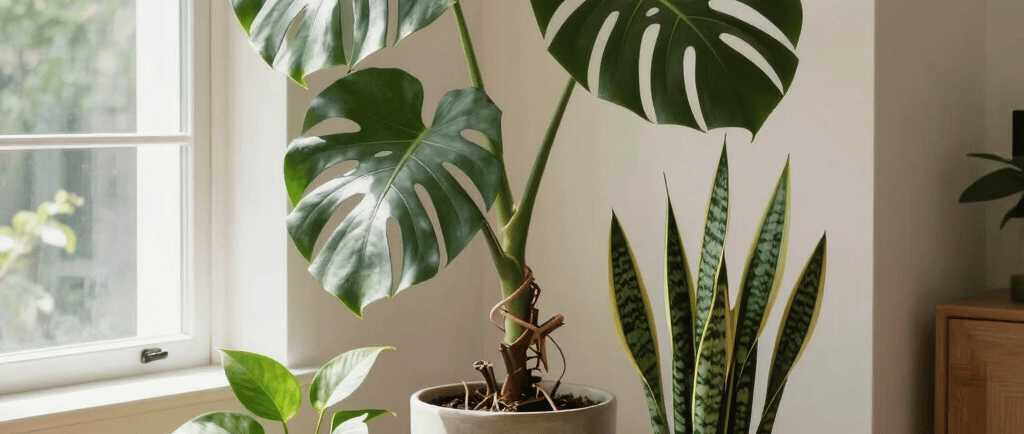
Monstera deliciosa is a fast grower during the growing season and needs corresponding care. Water when the top 2 inches of soil are dry — roughly weekly in summer, every 10-14 days in winter. Fertilise every two weeks in summer at half strength — monsteras are hungry plants and respond visibly to regular feeding with faster growth and larger, more fenestrated leaves. Wipe large leaves with a damp cloth monthly to remove dust. Provide a moss pole or other support as the plant grows — monsteras climb naturally and produce larger leaves when given something to climb. Repot every 2 years in spring.
Peace lily is the most communicative of all common houseplants — it droops dramatically when it needs water and perks back up within hours of being watered, making it surprisingly easy to care for once you understand it. Water when you see the first signs of drooping — don't wait until it's completely wilted. Fertilise monthly in spring and summer. Peace lilies prefer lower light than most houseplants and actually suffer in direct sun — north or east-facing windows are perfect. Keep away from heating vents and cold draughts — they're sensitive to temperature extremes.
Succulents and cacti need the most different care from the general routine. Water thoroughly then let the soil dry out completely — bone dry, all the way through — before watering again. In summer this might be every 2-3 weeks. In winter it might be once a month or less. Use cactus-specific potting mix — standard potting mix holds too much moisture. Never fertilise in winter. Bright direct sun for most of the day is ideal — a south-facing window is perfect. Repot only when seriously root-bound — every 3-5 years for most.
Herbs have the most demanding care schedule of anything in this guide because they're actively producing edible material and need consistent conditions to do it well. Basil, parsley, and chives want consistent moisture — check daily in summer. Rosemary and thyme prefer to dry out significantly between waterings. Fertilise herbs lightly every 2-3 weeks during the growing season — nitrogen-heavy fertiliser encourages leafy growth which is exactly what you want. Harvest regularly — frequent cutting stimulates new growth and prevents bolting. Replace annual herbs like basil every season.
The One-Page Cheat Sheet Summary
Here's the condensed version — everything from this guide boiled down into the quick-reference format you can actually use at a glance. Screenshot it, print it, stick it somewhere near your plants.
Every week — takes 10 minutes: Check soil moisture with the finger test on every container. Water thoroughly anything that's dry. Check leaf undersides for pests on every plant. Remove any dead, yellow, or damaged leaves with clean scissors. Rotate each plant a quarter turn. Note anything that needs attention next month.
Every month — takes 20 minutes: Fertilise all actively growing plants at half strength (March through September only — nothing in October through February). Check every plant for root-bound signs. Empty, wipe, and clean all saucers. Reassess light placement — is everything still in the right position? Deep-clean dusty leaves with a damp cloth. Top dress any compacted soil with fresh potting mix.
Every season — takes 1-2 hours: Spring: repot anything root-bound, resume fertilising, start seeds, move plants to better light, add new plants. Summer: shift plants back from scorching windows, increase watering vigilance, step up pest checks, switch fruiting plants to low-nitrogen fertiliser. Autumn: reduce watering frequency, stop fertilising in October, bring outdoor plants inside, clean windows, set up grow lights for winter. Winter: water minimally — only when completely dry for most plants, no fertiliser, manage heating dryness with grouping and pebble trays, protect from cold glass.
Emergency troubleshooting — quick guide: Yellowing leaves with wet soil — overwatering, stop immediately, check roots for rot. Yellowing leaves with dry soil — underwatering or natural old-leaf shed, water and observe. Crispy brown edges — low humidity or inconsistent watering, increase humidity, check watering rhythm. Drooping despite moist soil — root rot, remove from pot, trim brown roots, repot in fresh dry soil. Tiny flies around soil — fungus gnats from overwatered soil, let dry out, treat with sticky traps. White cottony spots — mealybugs, treat with 70% isopropyl alcohol on a cotton swab, then neem oil. Fine webbing on leaves — spider mites, increase humidity, spray with insecticidal soap immediately.
When to let a plant go: This one's hard. But if a plant has lost more than 75% of its foliage, has severe root rot with no viable roots remaining, or has a pest infestation that's spread despite weeks of treatment — let it go. A dead plant in a collection spreads pests and disease to healthy ones. Learn what it taught you and move on. No shame in it.
Conclusion
Here's the truth about apartment plant care that took me way too long to figure out: it's not complicated. It never was. The complexity is invented by the lack of a system — by the constant guessing about when to water, whether to fertilise, whether that yellow leaf means something serious. A simple routine dissolves all of that. Weekly checks mean you know your plants. Monthly tasks mean they're consistently healthy. Seasonal adjustments mean they're supported through every condition the year throws at them.
Start with the weekly routine. Just that. Ten minutes on a Sunday morning with a coffee — soil checks, quick pest scan, dead leaf removal, quarter turn on each pot. Do that every week for a month and you'll be amazed how much better you know your plants and how much more confident you feel about caring for them. Add the monthly tasks when the weekly ones feel automatic. Lean into the seasonal guide as you start to notice your plants responding to the time of year.
The cheat sheet in this guide is yours to customise. Not all plants need the same care, not all apartments have the same light, not all plant parents have the same schedule. Take what works, leave what doesn't, adjust for your specific collection and your specific life. That's what a good cheat sheet is for.
Now I want to hear from you — what's your current plant care routine? Do you have a system, or are you improvising and hoping for the best? Drop it in the comments. And if this guide helped you build something more structured, share it with another plant parent who's been winging it. Their plants will thank you for it. 🌿